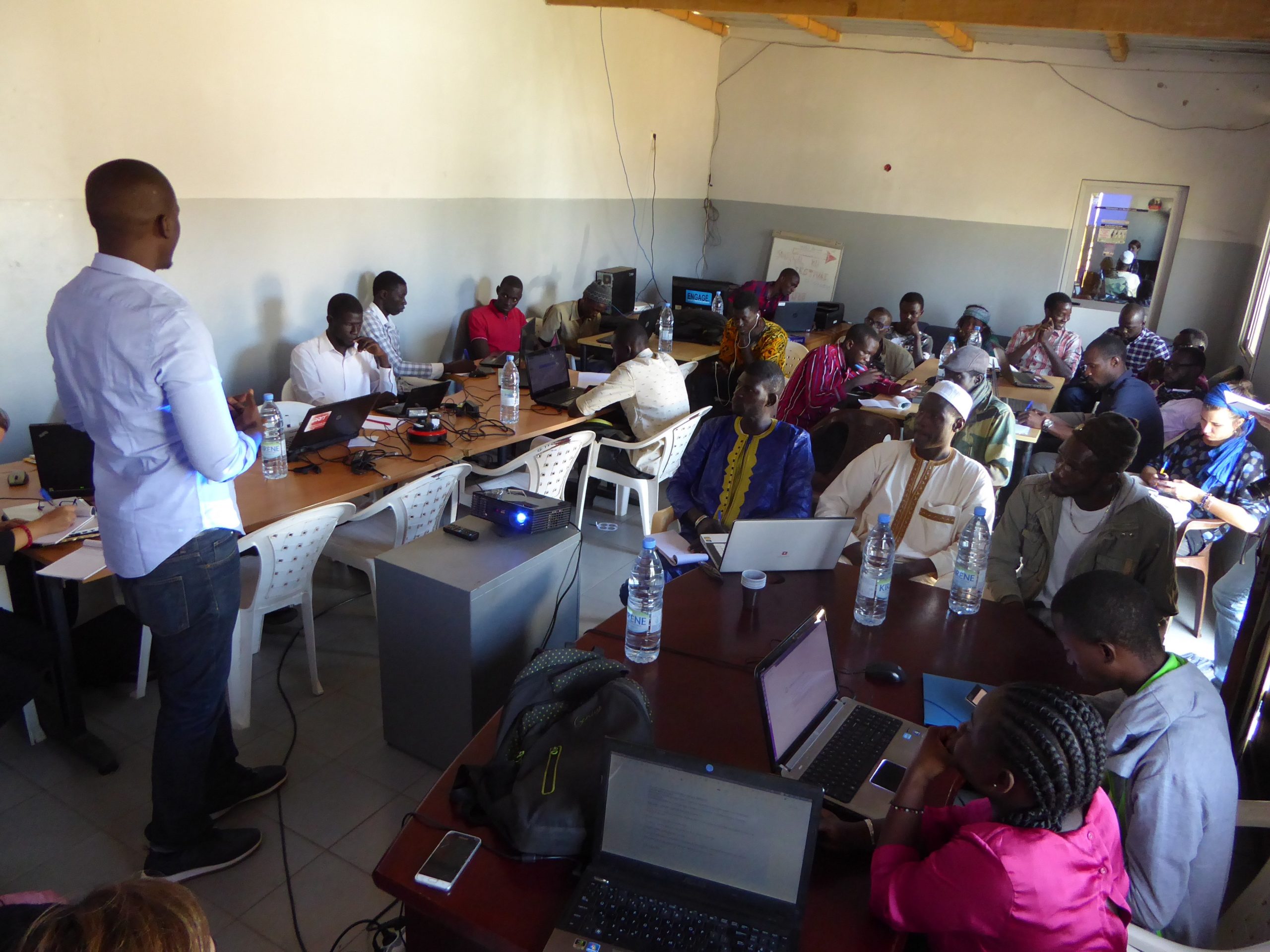
Organization of mentoring and local empowerment programs
Committed to fostering local expertise within a still-emerging open-source ecosystem…
…able to participate in or implement the various types of activities specific to a project, from programming to reporting and accountability tools…
…or formally organizing yourselves while taking into account the specific governance requirements of the open-source community?
LLg runs mentoring programs to empower young open-source collectives, particularly those within the OpenStreetMap ecosystem.
These activities range from training on project management, open-source governance, and outreach to stakeholders new to the field, to the implementation of mentoring and facilitation initiatives led by the most active members of these open-source collectives.
These programs can draw on open-source documentation resources created by LLg.
Mentoring at every level
- Learning how to organize activities that incorporate planning, organization, accounting, accountability, and reporting, through exercises and practical applications
- Sharing governance practices from the OSM ecosystem, providing support for structuring, and co-drafting OSM community engagement programs
- Preparing to speak publicly and raising awareness about free software and OpenStreetMap
For audiences that have thus far lacked the necessary resources and have consequently been limited in their development
- Individuals and groups who are often young, enthusiastic, and already involved in local community initiatives
- But who are rarely familiar with project management techniques and practices, or with the OpenStreetMap ecosystem
- Support for organizational development draws on LLg’s experience in the field since OpenStreetMap’s early days in humanitarian aid and development, which have seen some initiatives succeed and others fail
A wide variety of programs, often complementary
- Organizing organizational learning workshops with a group of facilitators from diverse backgrounds, in order to benefit from the exchange of their experiences in their respective contexts
- The implementation of mentoring initiatives, part-time facilitation grants, and volunteer programs focused on open-source geomatics and open data, which can serve as an extension of learning workshops organized beforehand
- Remote support and advice, as well as assistance at regional and international conferences
Various forms of implementation
- As part of a program specifically dedicated to this type of capacity building
- As a training module within a broader program
- As a separate component, implemented as part of a project
Specific supplementary materials that are freely available
- Documentation and tools developed and tested over ten years of experience in this area of local capacity building
- Available online under the CC-BY-SA open license
- Can be used online or offline, depending on the constraints of the context in which they are used
Examples of implementations
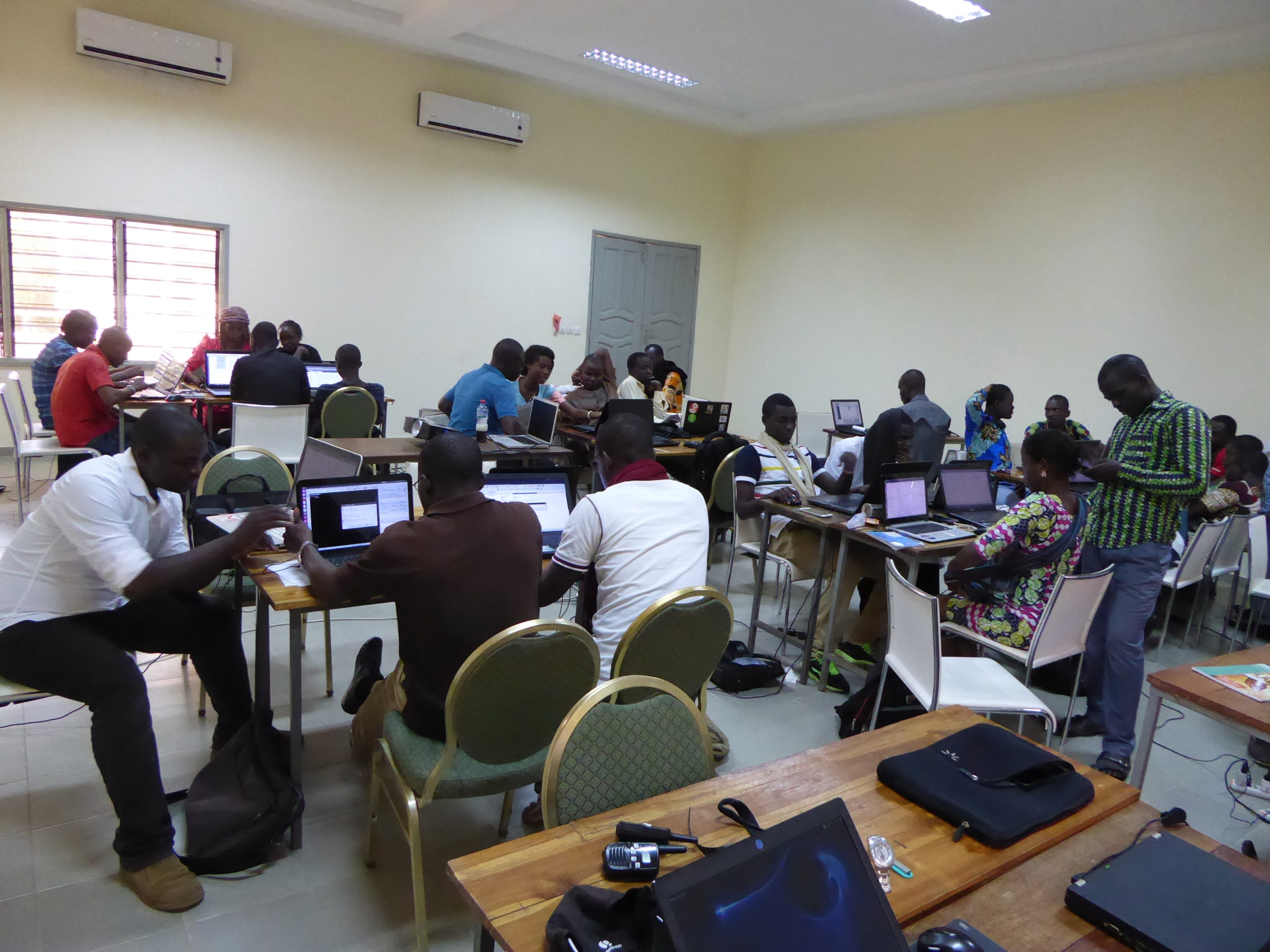
Regional capacity-building missions
Focused on facilitators of OSM collectives regarding governance, structuring, and project management.

Preparing for a conference presentation
A group of facilitators trained to create presentations focused on their OpenStreetMap communities, with direct application during the State of the Map Burkina Faso 2015.
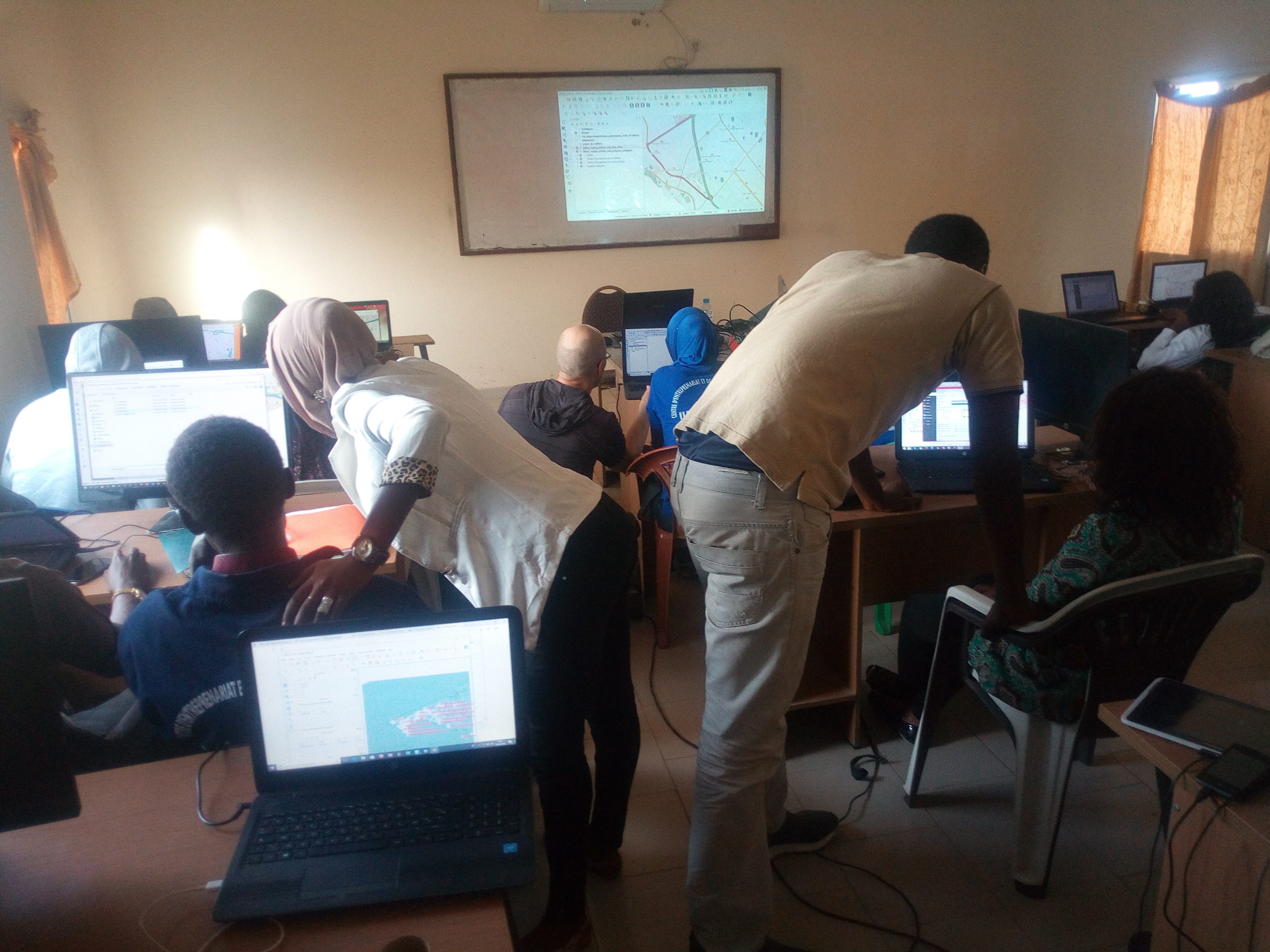
Hands-on learning of project management with accountability through fieldwork
Onboarding and supporting project or training co-facilitators through the various stages of project management, starting with the preparation phase: obtaining permits, logistics, monitoring the operating budget, managing contractors, preparing accounting and accountability documents, and producing technical and financial reports.